


A BT Asset Hub Case Study by Caroline Macdonald
Founder, Black Tie Holdings
“The world has trillions of dollars in proven mineral wealth that traditional systems still struggle to recognise. We didn’t see a resource problem. We saw an infrastructure problem.”
— Caroline Macdonald
Why This Matters to the Resource Industry
Global mining and precious metals markets underpin much of the world’s financial and industrial activity. Gold alone represents a multi-trillion-dollar global market and remains one of the most trusted stores of value in history. Yet despite the size of the market, one of the largest inefficiencies remains hidden beneath the surface.
Across the resource sector, verified in-ground assets and vaulted bullion often remain capital constrained. Resource owners may hold independently verified mineral reserves under internationally recognised standards, while institutions and individuals may hold significant bullion reserves in vaults. Yet neither can efficiently unlock value without relying on complex financing structures, equity dilution, or sale of the underlying asset.
This challenge creates a significant Total Addressable Market (TAM). Trillions of dollars in global mineral reserves and vaulted precious metals remain underutilised because existing financial infrastructure was never designed to treat these assets as digitally transferable and liquid forms of value.
AZ Reserves and BT Asset Hub were designed to solve this structural problem.
Part One: The Problem — Why Traditional Financial Models Failed Resource Owners
Over years of working across real estate, commodities and structured finance, our team repeatedly saw a pattern emerge.
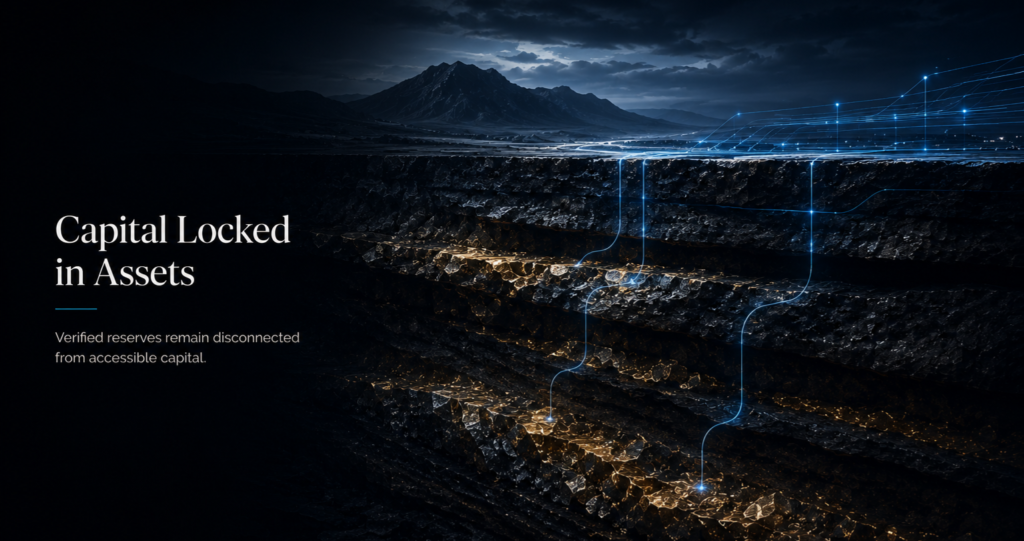
Mining groups with legitimate geological verification often struggled to secure growth capital without surrendering ownership. Institutions holding physical bullion faced a different problem: while their assets retained value, they remained largely static and difficult to leverage.
Even when reserves were validated through recognised standards including geological and reserve verification methodologies, access to capital often remained disconnected from asset value.
The problem was not the asset quality.
The problem was the infrastructure around it.
Traditional systems created four recurring constraints:
- Value trapped in vaults and in-ground reserves
- Capital access requiring equity dilution
- Limited liquidity pathways
- Fragmented verification and ownership systems
“We weren’t trying to create another token. We were trying to create a system where verified value could finally move.”
Part Two: Why a Reserve Model Was Required
Tokenisation alone was never enough.
The market had already demonstrated that issuing a token without reserve integrity, legal structure, and trust mechanisms simply created digital representations without long-term value.
AZ Reserves required a broader architecture.
Together with Arizore and BT Asset Hub, we designed a reserve framework based on three integrated pillars:
Forward Contracts: verified mines pledge future production and create structured pathways for value recognition.
Acquired Bullion: institutional bullion holders strengthen reserve value through tokenisation.
Institutional Utility: reserve assets support collateralisation, financing programs and broader liquidity infrastructure.
These pillars were intentionally designed to work together. Overreliance on a single model creates fragility. Diversified reserve inputs create resilience.
Part Three: What Was Built — The AZ Reserve Architecture
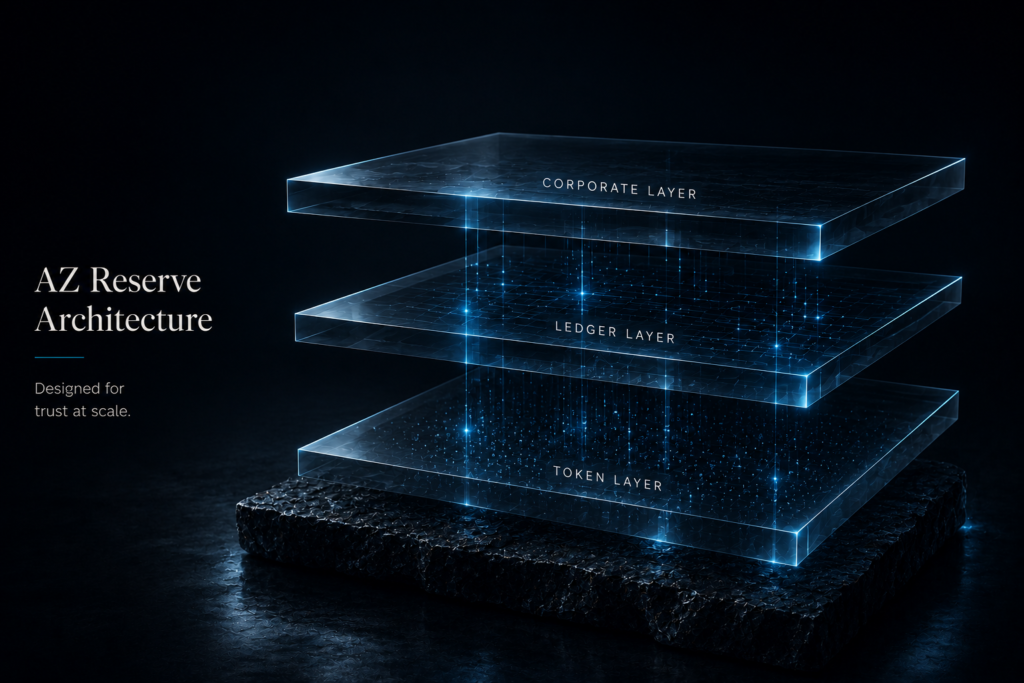
AZ Reserves introduced a structured three-layer model consisting of:
Corporate Layer: Arizore governance and oversight.
Ledger Layer: reserve accounting and verification.
Token Layer: AZ Gold (AZG) and AZ Silver (AZS) digital asset issuance structures.
Within BT Asset Hub this architecture was supported through:
Layer One: Compliance Infrastructure
Compliance was designed as a foundation rather than a retrofit.
Participation requires verification pathways, ownership documentation, onboarding procedures, contractual structures and transparent reserve processes before token issuance occurs.
The focus was simple:
Digital ownership needed to remain aligned with real-world enforceability.
Layer Two: Reserve Verification
Trust cannot rely on technology alone.
The reserve framework incorporated documented verification procedures around ownership, reserve participation and physical asset allocation. Whether dealing with mines or bullion providers, asset verification sits at the centre of the model.
Layer Three: Liquidity Infrastructure
Traditional mining and bullion markets rarely offer flexible ownership movement.
By integrating into BT Asset Hub and future secondary market functionality, participants gain access to pathways that allow ownership to become dynamic rather than static.
Part Four: Why Trust Became the Core Product
The strongest lesson from this engagement was unexpected.
Technology was not the most important deliverable.
Trust was.
The resource sector historically depends upon relationships, documentation, verification, and credibility. Bringing those principles into digital markets required more than blockchain infrastructure.
It required:
- compliance-first architecture
- reserve transparency
- independently verifiable processes
- structured issuance models
- enforceable ownership pathways
“The market does not reward digital wrappers. It rewards trusted infrastructure.”
What This Means for the Future of Resource Markets

AZ Reserves represents more than tokenised gold or silver.
It demonstrates a new framework where verified resources can participate in global capital markets without forcing asset owners to surrender control.
For miners, it creates access to growth capital without traditional dilution.
For bullion providers, it transforms static assets into productive financial instruments.
For institutions, it creates a reserve model designed for transparency and scalability.
Most importantly, it establishes a repeatable blueprint for how resource assets can move into digital markets while preserving the trust standards that traditional markets still demand.
“Because the future of tokenisation is not simply creating digital assets. It is creating systems that institutions trust enough to build upon.”
— Caroline Macdonald
Founder, Black Tie Holdings